
School Jersey Ideas for Senior Year
Practical ideas for a year 12 jersey: class names, nicknames, number assignment, colors, school approval, size collection and a deadline plan.
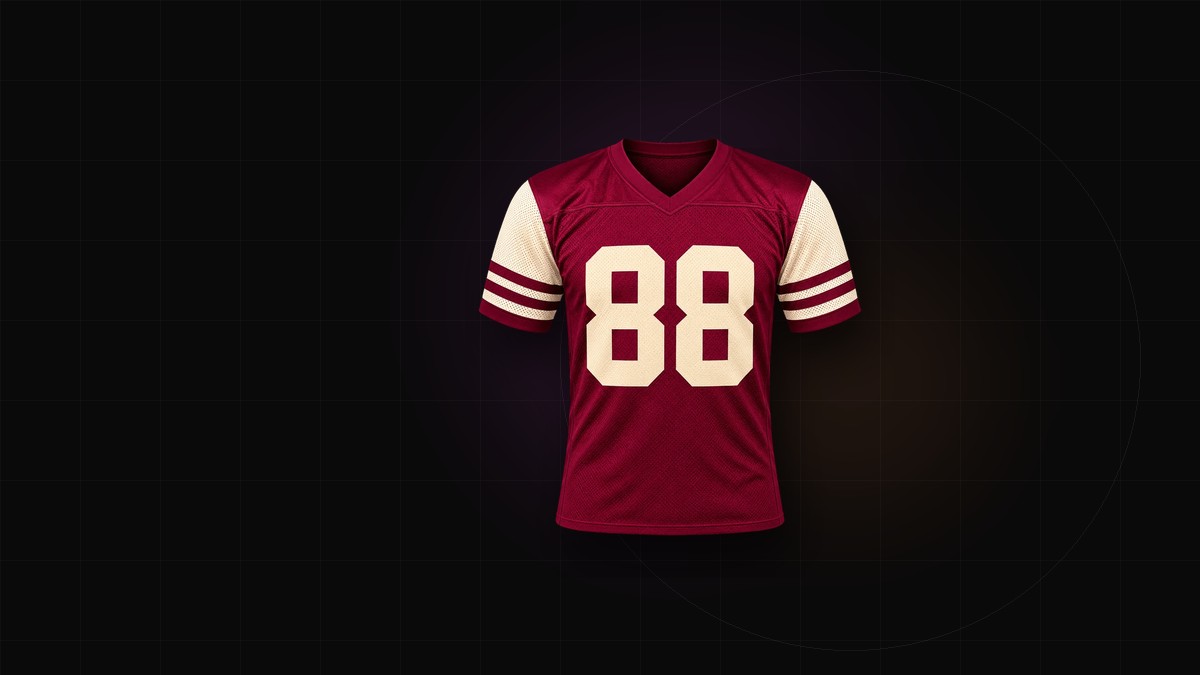
The final year of school produces exactly one piece of clothing most people keep: the year 12 jersey. It is also the most political garment a student will ever commission. Everyone has an opinion, the budget is fixed, the school has rules and the delivery date cannot move.
Good senior jerseys come from a boring process: decide early, write it down, get approval, and leave enough time for production. The design is the fun part, but the process is what makes it wearable.
Pick a class name that ages well
Inside jokes date fast. A name that is hilarious in the group chat in March can be embarrassing in a family photo in December, and truly unfortunate ten years later.
Strong directions tend to be simple:
- a place reference tied to the school or town;
- a cohort word plus the graduation year;
- a single noun the group actually uses;
- a short phrase that reads cleanly in capitals.
Two words is usually enough. Test the name at jersey scale, in the font you plan to use. If it needs a caption to make sense, it is not the name. Avoid anything that mocks a teacher, another year group or a specific student. Those jokes do not survive the approval meeting, and they should not.
Treat nicknames as a design constraint
Back nicknames are standard on senior jerseys, and they are where most designs get messy. Set constraints before people submit:
- one or two words;
- no surnames, no initials only;
- nothing targeted at another person without their consent;
- pronounceable at a glance;
- short enough to fit the back panel without shrinking.
Use the jersey name generator to open up options, then shortlist and vote. Do not let one person name the entire cohort, and do not accept late submissions after the list is locked. A shared document works better than a group chat because it preserves the final version.
Decide how numbers are assigned
There are several fair methods: free choice with a deadline, seniority, a random draw, or a vote for a small set of numbers. Any of them works if it is announced before people get attached to a number.
Practical rules:
- No duplicates. Collect a second choice at the same time.
- Decide how
0and leading zeros are handled with the supplier before anyone picks07. - Check whether multi-digit numbers cost more or are sized differently.
- Keep one spreadsheet with name, number, size and payment status.
- Lock the list before production starts.
The number is part of the design, not an afterthought. A back panel built around two digits can look cramped when a late addition needs three.
Choose colors that survive photos and rules
School colors plus one neutral is the safest system: two main colors and a white, cream or black separator. A separate class color can work if it does not fight the school palette, but four colors competing for equal area rarely does.
Avoid thin pinstripes, tiny repeating patterns and large gradients on entry-level polyester. They either disappear or band. Check contrast between the number and the back panel; light text on light fabric vanishes in sunlight and in phone photos.
Look at the palette at thumbnail size, because that is how the jersey will appear in group photos and on social media. If the design only works when viewed large, it is not finished.
Get school approval before designing
Talk to the year coordinator or administration early, and put the questions in writing:
- Can we use the school crest, name or motto?
- Are there uniform, sponsor or color restrictions?
- Can the jersey be worn on campus or at official events?
- Does the school require a neutral version for photographs?
Some schools allow a bold cohort design for casual wear but expect something quieter for official photos. Others require approval of the final artwork, not just the concept. If the crest is not permitted, use initials, a year mark or an original emblem instead. Keep the approval email with the order file so nobody has to relitigate it later.
Collect sizes properly
Do not guess, and do not let people choose a size from a different brand's chart. Supplier sizing varies.
- Share the actual size chart from the manufacturer.
- Bring sample garments to a lunchtime or after-school fitting if possible.
- Record chest measurement or tried-on size, not just
MorL. - Ask whether the cut is unisex or fitted; they are not interchangeable.
- Order a small buffer for late additions, damaged items and sizing mistakes.
A buffer of roughly five to ten percent of the run is a common starting point for team orders. Confirm it with your supplier rather than treating it as a rule.
Work backwards from delivery day
Start with the date you need jerseys in hand: photo day, graduation, the final home game. Then subtract production, shipping and a buffer.
Set internal deadlines for:
- Class name and nickname list finalized.
- Numbers assigned and checked for duplicates.
- Sizes and payments collected.
- School approval received.
- Final proof signed off.
- Order placed.
Give the supplier a real deadline, then add at least a couple of weeks of slack. One owner should hold the spreadsheet and be the only person allowed to send the final list. Committees design well; committees do not administer well.
Design the kit in the Year 12 jersey generator, where the name and number layout is built for a back panel rather than scaled down from a poster. Then print the proof, tape it to a wall and look at it from across the room. If the class name and the numbers still read, the jersey will survive the year and the decade after it.